Sunday, 28 July 2013

Mother Teresa

Historical Importance of Mother Teresa:
Mother Teresa founded the Missionaries of Charity, a Catholic order of nuns dedicated to helping the poor. Begun in Calcutta, India, the Missionaries of Charity grew to help the poor, the dying, orphans, lepers, and AIDS sufferers in over a hundred countries. Mother Teresa's selfless effort to help those in need has caused many to regard her as a model humanitarian.


Mother Teresa Also Known As: Agnes Gonxha Bojaxhiu (birth name), "the Saint of the Gutters"
Overview of Mother Teresa:
Mother Teresa's task was overwhelming. She started out as just one woman, with no money and no supplies, trying to help the millions of poor, starving, and dying that lived on the streets of India. Despite others' misgivings, Mother Teresa was confident that God would provide.
Birth and Childhood
Agnes Gonxha Bojaxhiu, now known as Mother Teresa, was the third and final child born to her Albanian Catholic parents, Nikola and Dranafile Bojaxhiu, in the city of Skopje (a predominantly Muslim city in the Balkans). Nikola was a self-made, successful businessman and Dranafile stayed home to take care of the children.
When Mother Teresa was about eight years old, her father died unexpectedly. The Bojaxhiu family was devastated. After a period of intense grief, Dranafile, suddenly a single mother of three children, sold textiles and hand-made embroidery to bring in some income.
Becoming a Nun
It took more than two years to become a Loreto nun. After spending six weeks in Ireland learning the history of the Loreto order and to study English, Mother Teresa then traveled to India, where she arrived on January 6, 1929. After two years as a novice, Mother Teresa took her first vows as a Loreto nun on May 24, 1931.
As a new Loreto nun, Mother Teresa (known then only as Sister Teresa, a name she chose after St. Teresa of Lisieux) settled in to the Loreto Entally convent in Kolkata (previously called Calcutta) and began teaching history and geography at the convent schools.
Usually, Loreto nuns were not allowed to leave the convent; however, in 1935, 25-year-old Mother Teresa was given a special exemption to teach at a school outside of the convent, St. Teresa's. After two years at St. Teresa's, Mother Teresa took her final vows on May 24, 1937 and officially became "Mother Teresa."
Almost immediately after taking her final vows, Mother Teresa became the principal of St. Mary's, one of the convent schools and was once again restricted to live within the convent's walls.
"A Call Within a Call"
For nine years, Mother Teresa continued as the principal of St. Mary's. Then on September 10, 1946, a day now annually celebrated as "Inspiration Day," Mother Teresa received what she described as a "call within a call." She had been traveling on a train to Darjeeling when she received an "inspiration," a message that told her to leave the convent and help the poor by living among them.
For two years Mother Teresa patiently petitioned her superiors for permission to leave the convent in order to follow her call. It was a long and frustrating process. To her superiors, it seemed dangerous and futile to send a single woman out into the slums of Kolkata. However, in the end, Mother Teresa was granted permission to leave the convent for one year to help the poorest of the poor.
In preparation for leaving the convent, Mother Teresa purchased three cheap, white, cotton saris, each one lined with three blue stripes along its edge. (This later became the uniform for the nuns at Mother Teresa's Missionaries of Charity.) After 20 years with the Loreto order, Mother Teresa left the convent on August 16, 1948.
Rather than going directly to the slums, Mother Teresa first spent several weeks in Patna with the Medical Mission Sisters to obtain some basic medical knowledge. Having learned the basics, 38-year-old Mother Teresa felt ready to venture out into the slums in December of 1948.
Founding the Missionaries of Charity
Mother Teresa started with what she knew. After walking around the slums for a while, she found some small children and began to teach them. She had no classroom, no desks, no chalkboard, and no paper, so she picked up a stick and began drawing letters in the dirt. Class had begun.
Soon after, Mother Teresa found a small hut that she rented and turned it into a classroom. Mother Teresa also visited the children's families and others in the area, offering a smile and limited medical help. As people began to hear about her work, they gave donations.
In March 1949, Mother Teresa was joined by her first helper, a former pupil from Loreto. Soon she had ten former pupils helping her.
At the end of Mother Teresa's provisionary year, she petitioned to form her own order of nuns, the Missionaries of Charity. Her request was granted by Pope Pius XII; the Missionaries of Charity was established on October 7, 1950.


bob marley


In the year 1944, Captain Norval Marley married a young Jamaican girl named Cedalla Booker. On February 6, 1945 at two thirty in the morning their son, Robert Nesta Marley was born in his grandfather's house. Soon after Bob was born his father left his mother. He did however give financial support and occasionally returned to see his son.

It was now the late fifties, jobs were scarce in Jamaica, so Bob followed his mother from their home in St. Ann to Trenchtown (West Kingston) to seek employment in the big city. Trenchtown got it's name because it was built over a ditch which drained the sewage of old Kingston. In Trenchtown Bob spent a lot of his time with his good friend Neville Livingstone who people called by his nickname, Bunny. Also in the big city Bob was more exposed to the music which he had loved, including such greats as Fats Domino and Ray Charles. Bob and Bunny attended a music class together which was held by the famous Jamaican singer Joe Higgs. In that class they met Peter Macintosh and soon became good friends. -+

In the meantime Jamaican music evolving and became very popular throughout the Caribbean due to it's invention of Ska music. When Bob was 16, he started to follow his dream of becoming a musician. Music to many young Jamaicans was an escape from the harshness of everyday life. One of those kids was Jimmy Cliff who at the age of 14 had already recorded a couple of hits. After meeting Bob, Jimmy introduced him to Leslie Kong, a local record producer. Bob followed his advice and auditioned for Leslie Kong. Bob's musical talents shone much more brightly then anyone else that day and found himself in the studio recording his first single "Judge Not". Unfortunately neither "Judge Not" nor his 1962 single "One more cup of Coffee" did very well. Bob soon left Kong after she failed to give him his pay.

The following year Bob, Bunny and some other friends formed the Wailing Wailers. The didn't get off to a great start, after just a couple recording sessions two members, Cherry and Junior Braithwait left the band. The band continued on and were introduced to Clemet Dodd, a producer of the record company Coxsone. It was here where the Wailing Wailers recorded the first song "Simmer Down" which did quite well in Jamaica. To help with the recording of their songs the studio provided several talented Ska musicians. The Wailing Wailers consisting now of Bob Marley, Peter Tosh and Bunny were starting to become quite popular locally. Their audiences rapidly grew and they recorded several more songs on the Coxsone label which included "It Hurts to be Alone" and "Rule the Roadie" Bob soon took on the role of the leader, being the main songwriter and all.


Bob's life continued to look more bright on February 10, 1966 when Bob Marley married girlfriend Rita Anderson. The next day Bob left for the United States to visit his mother who lived in Delaware. While in the US he worked to better finance his music and soon returned home. When Bob Marley returned the Wailing Wailers' music evolved from Ska to Rock Steady. This evolution conflicted with Coxsone who wanted a Ska band. So the newly Wailing Wailers left Coxsone to form and renamed themselves the Wailers. Instead of looking around for a new label the Wailers decided to form their own which they called Wail 'N' Soul. This coincided with the birth of the Marley's first born who they named Cedalla. They released a couple signals on their label such as "Bend down low" and "Mellow Mood" before it folded the very same year.

The ending of their label affected the band greatly, it wasn't until they met Lee Perry that they got back on track. With the help of Lee Perry the Wailers produced such great tracks as "Duppy Conquerer", "Soul Rebel", "400 Years" and "Small Axe".

1970 saw the Wailers family grow with the addition of Aston "Family Man" Barret and his brother Carleton. The Wailers were now quite popular throughout the Caribbean but still internationally unknown. With this popularity a second more successful label was formed by the Wailers called Tuff Gong after a nickname of Bob Marley. The Wailers met Johnny Nash and soon Bob accompanied Nash to Sweden and London. When in London, Bob recorded "Reggae on Broadway" which was released by CBS. After this the rest of the Wailers arrived in London to help promote the single only to find that there were out of money and stranded there. With little options available, Bob went into the Island Records Basing Street Studios and asked to speak to the boss, Chris Blackwell with hopes of a possible record deal.

Mr. Blackwell had already heard of the Wailers and signed them on the spot. He advanced them eight thousand pounds so that they could fly back home and record their first album for Island. This was a massive deal, for the first time a reggae band would have access to the finest recording facilities. The album they released was "Catch a Fire", it was very well received by critics and was one of the first reggae albums. Before the Wailers reggae was sold on signals or compilation albums.


In the Spring of 1973 the Wailers arrived back in London to kick off their three month tour of Britain. At the conclusion of the tour they returned back to Jamaica where Bunny decided to quit touring. He was replaced by Joe Higgs. The Wailers along with Higgs travelled to the US were they were scheduled to open 17 shows for the number one black act in the States, Sly and the Family Stone. The Wailers were fired after 4 shows because they were more popular then they band the opened for, the crowd often chanted "Wail-ers" well into the Sly and the Family Stone set. Also they opened a couple dates for Bruce Springsteen. After Sly and the Family Stone axed the Wailers they found themselves once again without money and stranded, this time in Las Vegas. Somehow they found their way to San Fransico. While there they did a live concert broadcast for the radio station KSAN-FM. The whole experience boosted their popularity in North America.

With 1973 winding down the Wailers released the much anticipated follow up album to "Catch a Fire" called "Burnin". On this album many Wailer classics appear such as "I shot the Sheriff" and "Get Up Stand Up". The Wailers popularity in North America grew even more when Eric Clapton re-recorded "I Shot the Sheriff", becoming a number one hit on the US singles charts.

1975 saw the release of the Wailers's third album, "Natty Dread" with such great tracks as "Talking Blues", "No Woman No Cry" and "Revolution". On the down side though two thirds of the original Wailing Wailers, Peter Tosh and Bunny Wailer quit the band to pursue solo careers. This caused the band to change their name again. This time to Bob Marley and the Wailers. The departure of the two members created a hole in the backing vocal section, this hole was filled and then some by the I-Threes (Rita Marley, Judy Mowatts and Marcia Grittiths). That summer the band started a new European tour. Two of those shows were at the Lyceum Ballroom, both shows were considered among the top of the decade.

Both shows were recorded and made the album "Live!" which included the unforgettable live version "No Woman No Cry" which was a world wide hit. The band underwent more changes with the addition of Al Anderson and Bernard Harvey who were later replaced by Junior Marvin and Tyrone Downie. The last time the original Wailers ever played together was at a Stevie Wonder concert for the Jamaican Institute for the blind. Bob Marley and the Wailers continued their roll releasing the incredible album "Rasta man Vibration" in 1976. This capped off a type of Reggae-Mania happening in the states. Rolling Stone named them band of the year. On the Rasta man Vibration album was the powerful track "War" which lyrics came from a speech given by Emperor Haile Selassie. Bob Marley decided to play a free concert at Kingston's National Heroes Park on December 5, 1976.

The idea behind the concert was a peaceful message against the ghetto wars happening in Trenchtown at the time. Tragedy struck two days before that he get on stage, gunmen broke into the Marley home and shot at Bob, Rita, and two friends. Luckily no one was killed. Despite this Bob Marley went on to put on a memorable show two days later at the Smile Jamaica concert. Following the show the band left for the UK. While they were there they recorded 1977's "Exodus". Possibly their best album to date, it solidified the band's international stardom. It went number one in many countries including England and Germany. It was also one of the top albums of the year.

During their European tour, the band did a week of shows at the Rainbow Theatre in London. It was at the start of the tour when Bob injured his toe playing football. It was later diagnosed as cancerous. Also during this tour Bob received a very important ring, who's previous owner was the Ethiopian Emperor. In May Bob was informed of his cancer. His cancer would most certainly be taken care of by amputating the toe but Bob refused. To do so would be against his Rastafarian faith. With this news the remainder of the Exodus tour was cancelled. His illness didn't prevent him from recording music though, 1978 saw the release of "Kaya" which had a much more mellow sound then previous albums. Bob was accused of selling out because many of the songs were love songs or tributes to ganja (marijuana). Rastafarians believed the smoking the holy herb would bring them closer to Jah (god).

In April 1978, Bob returned to Jamaica to play the One Love Peace Concert. In attendance was Jamaican President Michael Manley and the leader of the Opposition Edward Seaga. It was Bob who got them on stage and even got them to shake hands. On June 15 he was awarded the Peace Medal of the Third World from the United Nations. For the first time he visited Africa going to Kenya and Ethiopia. On this trip he started to work on the song "Zimbabwe". The band also released their second live album "Babylon by Bus" with was recorded in Paris. The album which followed it was Survival in 1978. Throughout the album the theme of black survival was evident.

The Seventies were now coming to a close, Bob Marley and the Wailers were the most popular band on the road breaking many festival records. In 1980 the band found themselves in Gabon to perform in Africa for the first time. Here Bob Marley discovered that there manager had defrauded the band, Bob gave him a beating and fired him. The Zimbabwean government invited the whole band to perform at the countries Independence Ceremony in April. Bob later said of the invitation to be the biggest honour of his life.

After the amazing honour and experience Bob Marley continue to record, "Uprising" was released in 1980. Everything was looking bright, the band was planning an American tour with Stevie Wonder for that winter. Bob's health was deteriorating, but he still got clearance from a doctor to go on the road. The tour started with Boston, followed by New York. During the New York show Bob's looked very sick and he almost fainted. The next morning on Sept. 21 while jogging through Central, Bob collapsed and was brought to the hospital. There a brain tumour was discovered and doctors gave him a month to live. Rita Marley wanted the tour cancelled but Bob wanted to continue on. He played an unforgettable show in Pittsburgh but was too ill to continue so the tour was finally cancelled.

It would be the last show he ever performed. Treatment prolonged his life somewhat but the inevitable was soon to happening. Bob was transported to a Miami hospital where he was baptized Berhane Selassie in the Ethiopian Orthodox Church on November 4. In a final attempt to save his life he underwent a controversial treatment in Germany. While in Germany he celebrated his 36th and final birthday. Ultimately the treatment didn't work. Bob wanted to die at home so he was flown back. Unfortunately he didn't finish the trip, he died on May 11, 1981 in a Miami hospital. He was internationally mourned for and thousands showed up at his May 21 funeral to show their respects. In attendance wereboth the Jamaican President and the Leader of the Opposition. Bob Marley now rests in a mausoleum at his birthplace.

After his death he was awarded Jamaica's Order of Merit. The Prophet Gad insisted on becoming the owner of Bob's ring. However, amazingly the ring the disappeared and still has yet to be found. Bob's mother said that the ring was returned to it's place of origin.

Bob Marley knew of his fate. Being a visionary he foresaw this, his words will forever be immortalized in the lyrics in which he wrote.

"One bright morning when my work is over I will fly away home"

Netaji Subhas Chandra Bose

Subhas Chandra was born on 23 January, 1897 in Cuttack. His father named Rai Bahadur Janakinath Bose was a Government pleader working there. Subhas had obtained his early education at Cuttack. In his childhood, the influ­ence of his mother Probhavati Devi and that of the Headmaster named Beni Madhav Das taught him to learn about the ancient heritage of his motherland and to love India more than anything else in his life.

Subhas had his college education at Calcutta. He left for England on 15 September, 1919 to appear at the Indian Civil Service Examination, as desired by his father. He passed the examination by coming out 'Fourth' among the successful candidates, but he did not want to serve the British Government. So he resigned to the lucrative post offered to him. He returned to India and joined the Indian National Congress to fight for the independence of India.
Subhas was sent to jail about eleven times in his life. He became the President of the Congress Party, but later, resigned due to his differences of opinion with Gandhiji.
When the World War II broke in 1941, Subhas was interned in his Calcutta home under constant police guard'. He did not come out of his house for 40 days, nor did he see anyone during that period. And on the 41st midnight, he escaped in the disguise of a Maulavi and reached Germany under an Italian diplomatic passport with an Italian name of Orlando Mazzota.
In Berlin, he formed the first Indian National Army (I.N.A.) with the 'prisoners of war' who were Indian soldiers serving the British Army. Now he came to be known as 'Netaji'. Subhas also founded an Indian Radio Station called Azad Hind Radio in Berlin, from where he had very often to broadcast for his countrymen suggesting about their political activities during the war.
From Berlin, Subhas went to Japan, where the I. N. A. was enlarged with the addition of more soldiers and civil­ians. The I.N.A. was now a large army. Netaji, as the Chief Commander of the I.N.A., declared war against the British. The I.N.A. fought tooth and nail in the Burma front, and hoisted Indian national flag in Imphal at Manipur. The war took suddenly a strange turn, because the Japanese who were I.N.A.'s allied forces surrendered. So Netaji had to order retreat of his I.N.A.
Netaji's senior army officials advised him to go to Russia for help. He started for Russia in a Japanese aircraft which unfortunately met with an accident at the time of taking off, and the great Indian leader Netaji died on the spot or 18 August, 1945.

Sylvestar Stallone

This is one of the SADDEST stories ever told in Hollywood. His name is Sylvestar Stallone. One of the BIGGEST and Most famous American Movie superstars. Back in the day,Stallone was a
struggling actor in every definition. At some point,he got so broke that he stole his wife's jewellery and sold it. Things got so bad that he even ended up homeless. Yes,he slept at the New York bus station for 3 days. Unable to pay rent or afford food. His lowest point came when he tried to sell his dog at the liquor store to any
stranger. He didnt have money to feed the dog anymore. He sold it at $25 only. He says he walked away crying.

Two weeks later,he saw a boxing match between Mohammed Ali and Chuck Wepner and that match gave him the inspiration to write the script for the famous movie,ROCKY. He wrote the
script for 20 hours! He tried to sell it and got an offer for $125,000 for the script. But he had just ONE REQUEST. He wanted to STAR in
the movie. He wanted to be the MAIN ACTOR. Rocky himself. But the studio said NO. They wanted a REAL STAR.

They said he "Looked funny and talked funny". He left with his script. Afew weeks later,the studio offered him $250,000 for the script. He refused. They even offered $350,000. He still refused. They wanted his movie. But NOT him. He said NO. He had to be
IN THAT MOVIE.

After a while,the studio agreed,gave him $35,000 for the script and let him star in it! The rest is history! The movie won Best Picture,Best Directing and Best Film Editing at the prestigious
Oscar Awards. He was even nominated for BEST ACTOR! The Movie ROCKY was even inducted into the American National Film Registry as one of the greatest movies ever!

And do You know the first thing he bought with the $35,000? THE DOG HE SOLD. Yes,Stallone LOVED HIS DOG SO MUCH that he stood at the liquor store for 3 days waiting for the man he sold
his dog to. And on the 3rd day,he saw the man coming with the dog. Stallone explained why he sold the dog and begged for the dog back. The man refused. Stallone offered him $100. The
man refused. He offered him $500. And the guy refused. Yes,he refused even $1000. And,Believe it or Not,Stallone had to pay $15,000 for the same,same dog he sold at $25 only! And he
finally got his dog back!

And today,the same Stallone who slept in the streets and sold his dog JUST BECAUSE he couldnt even feed it anymore,is one of the GREATEST Movie Stars who ever walked the Earth!

Being broke is BAD. Really BAD. Have You ever had a dream? A wonderful dream? But You are too broke to implement it? Too tiny to do it? Too small to accomplish it? Damn! I've been there too many times!

Life is tough. Opportunities will pass you by,just because you are a
NOBODY. People will want your products but NOT YOU. Its a tough
world. If you aint already famous,or rich or "connected",You will find it rough.
Doors will be shut on You. People will steal your glory and crash your hopes.You will push and push. And yet NOTHING WILL HAPPEN.

And then your hopes will be crashed.You will be broke. Damn broke. You will do odd jobs for survival. You will be unable to feed yourself. And Yes,you may end up sleeping in the streets.
It happens. Yes,it does.

BUT NEVER LET THEM CRUSH THAT DREAM. Whatever happens to
You,Keep Dreaming. Even when they crush your hopes,Keep Dreaming. Even when they turn you away,Keep Dreaming.
Even when they shut you down,Keep Dreaming.

NO ONE KNOWS WHAT YOU ARE CAPABLE OF EXCEPT YOURSELF! People will judge You by HOW you look. And by WHAT You have.
But please,Fight on! Fight for Your place in history. Fight for your glory. NEVER EVER GIVE UP!

Even if it means selling all your clothes and sleeping with the dogs,ITS OKAY! But AS LONG AS YOU ARE STILL ALIVE,Your STORY IS NOT OVER. TRUST ME.

Keep Up the Fight. Keep your dreams and hope alive. Go gerrit.

Like and share if inspired. Lovely day people!

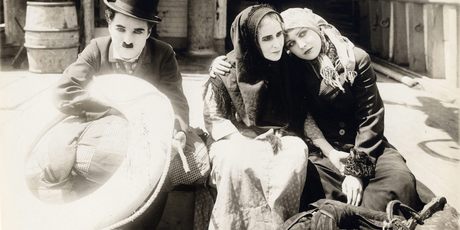
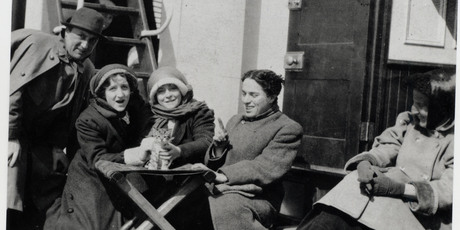
charlie chaplin


Beginning of his career

When he was about twelve, he got his first chance to act in a legitimate stage show, and appeared as "Billy" the page boy, in support of William Gillette in "Sherlock Holmes". At the close of this engagement, Charlie started a career as a comedian in vaudeville, which eventually took him to the United States in 1910 as a featured player with the Fred Karno Repertoire Company.
He scored an immediate hit with American audiences, particularly with his characterization in a sketch entitled "A Night in an English Music Hall". When the Fred Karno troupe returned to the United States in the fall of 1912 for a repeat tour, Chaplin was offered a motion picture contract.
He finally agreed to appear before the cameras at the expiration of his vaudeville commitments in November 1913; and his entrance in the cinema world took place that month when he joined Mack Sennett and the Keystone Film Company. His initial salary was $150 a week, but his overnight success on the screen spurred other producers to start negotiations for his services.
At the completion of his Sennett contract, Chaplin moved on to the Essanay Company (1915) at a large increase. Sydney Chaplin had then arrived from England, and took his brother’s place with Keystone as their leading comedian.
The following year Charlie was even more in demand and signed with the Mutual Film Corporation for a much larger sum to make 12 two-reel comedies. These include "The Floorwalker", "The Fireman", "The Vagabond", "One A.M." (a production in which he was the only character for the entire two reels with the exception of the entrance of a cab driver in the opening scene), "The Count", "The Pawnshop", "Behind the Screen", "The Rink", "Easy Street" (heralded as his greatest production up to that time), "The Cure", "The Immigrant" and "The Adventurer".